


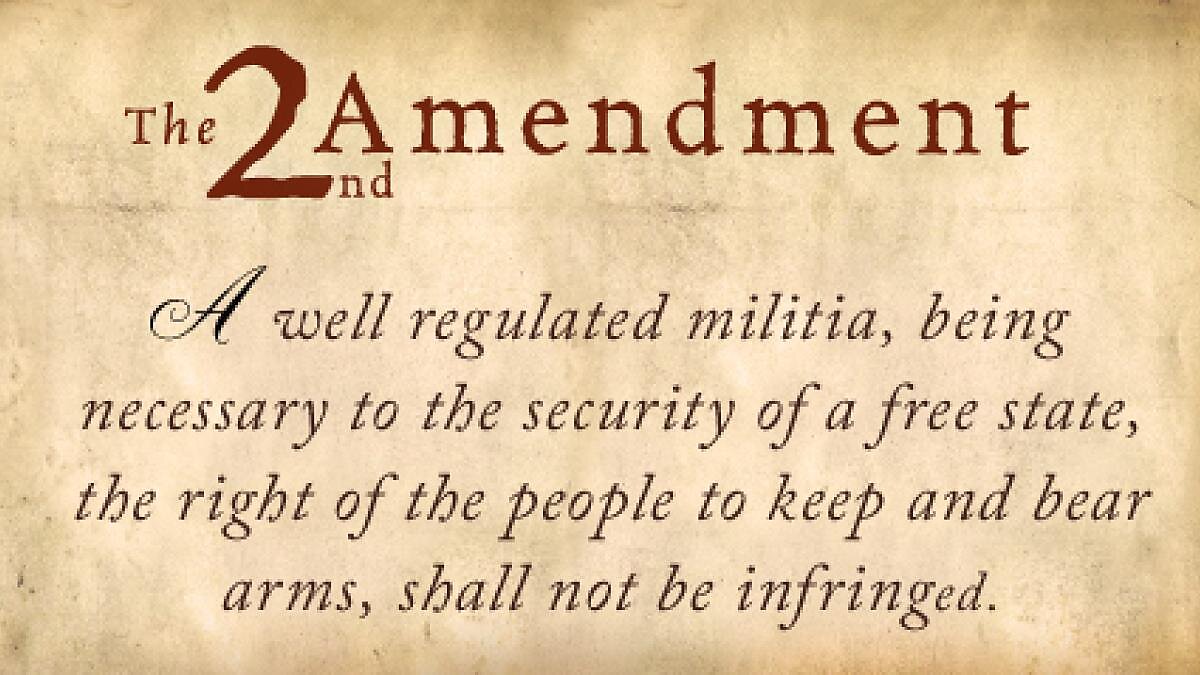
What a difference four days can make. Last Tuesday, a top DOJ lawyer argued in the Supreme Court that people have a right to carry guns in public. By Saturday, another DOJ official warned: “If you approach law enforcement with a gun, there is a high likelihood they will be legally justified in shooting you.” The government went from championing gun rights to defending ICE agents’ fatal shooting of Alex Pretti. Only restraints on the use of force can stop officials from turning the Second Amendment into an excuse to kill civilians.
Facts are still emerging about the Minneapolis shooting of Mr. Pretti by immigration agents, but videos show that they took him to the ground and appear to have removed a pistol from his waistband, then shot him to death. Mr. Pretti had a gun-carry permit.
Government officials rushed to defend the shooting. High-ranking DOJ prosecutor Bill Essayli wrote, “If you approach law enforcement with a gun, there is a high likelihood they will be legally justified in shooting you.” FBI Director Kash Patel declared, “You cannot bring a firearm, loaded, with multiple magazines to any sort of protest that you want. It’s that simple.”
Second Amendment advocates responded quickly. The NRA condemned Mr. Essayli for “making generalizations and demonizing law-abiding citizens.” Gun Owners of America demanded respect for “Americans’ right to bear arms while protesting.” Former NRA representative Dana Loesch asked Mr. Essayli, “Do you believe that mere legal possession within the vicinity of [an officer]…merits use of force as a response?” Congressman Thomas Massie (R‑KY) wrote, “Carrying a firearm is not a death sentence.”
Activist Jordan Levine observed that the government is wrongly treating “the mere presence of a legal firearm as justification for lethal force.” DOJ knows that this is not consistent with the law. Just four days before agents shot Mr. Pretti, the government argued in the Supreme Court that people generally have the right to carry guns onto private property. “As a practical matter,” the DOJ said, Americans should not be left guessing whether they have Second Amendment rights as they go about their daily business.
Yet the very same government is now apparently saying agents can open fire on armed people who get too close to them.

DOJ officials contradict themselves by challenging laws limiting carry while also treating the decision to do so as a reason to open fire. Tragically, though, such cases are commonplace. Ten years ago, local police stopped another Minneapolis-area man, Philando Castile, for a broken brake light. The officer told him to get his driver’s license without reaching for his legally permitted gun, but as Mr. Castile complied, the officer shot him.
Officers treat the presence of a constitutionally protected firearm as a justification for shooting civilians—and Mr. Essayli, Mr. Patel, and Border Patrol Chief Gregory Bovino are all too eager to excuse this.
What’s the solution? Part of it lies in the Fourth Amendment’s protection against excessive force. In the landmark case Tennessee v. Garner, the Supreme Court held that officers can use deadly force only when a suspect is a threat to others. Earlier decisions from other courts forbade the use of “any greater force than [was] reasonably and apparently necessary” for an officer’s protection, even if the suspect was resisting arrest. “Human life is too sacred,” read one decision, to approve of the needless use of deadly force.
Far from excusing such shootings, the common law required officers to try to prevent confrontations. In 1948, Justice Robert Jackson wrote that when officers illegally enter homes, people could mistake police for burglars, and their “natural impulse would be to shoot.” Should an officer, “seeing a gun being drawn… shoot first,” Justice Jackson thought the officer could be guilty of murder. As recently as 2006, in an opinion by Justice Antonin Scalia, the Court warned that “an unannounced entry may provoke violence in supposed self-defense by the surprised resident.”
There does have to be accountability for rights violations, such as excessive force. The Constitution invites juries to check government power and examine the reasonableness of uses of force. But court-made doctrines have severely curtailed the ability to sue officers—especially ICE agents like those who killed Mr. Pretti. Judges also often play “junior-varsity jury” and decide reasonableness on their own. Without reviving the remedies promised by the Constitution, rights can become just empty words, unable to protect real people.
Yet the law is not supposed to make Americans choose between their lives and their constitutional liberty. The Second Amendment gives people the right to bear arms, and the Fourth Amendment promises to stop the government from killing them for doing so.
Mr. Pretti’s death should be independently investigated. Courts should uphold strong limits on deadly force. And people should demand better of a government that voices their rights on Tuesday before insisting come Saturday that civilians can be killed for exercising them.