



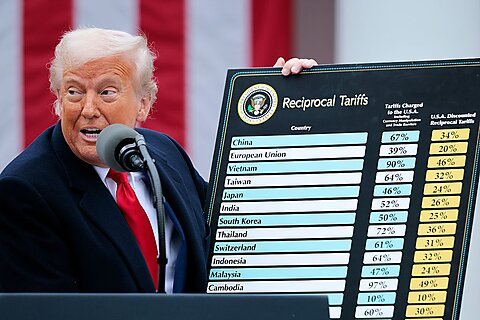


My latest column at The Dispatch examines what President Trump’s now-canceled Greenland tariff threat says about not only US trade policy but also the increasing use and abuse of “emergency” powers by the executive branch (and not just Trump).
Summarizing previous Cato research, I note that the 1976 Senate special committee charged with emergency powers reform was appalled that four national emergencies were in effect at that time, yet “today we live under 50 active national emergencies, several of which date back decades and all of which unlock broad executive powers—under IEEPA mainly but also several other US laws—that are typically reserved to Congress or delegated to the president in a much narrower fashion.” Here’s the full list:
As the table above shows, emergency rule is an endemic, bipartisan affliction, with Trump responsible for just 16 of the 50 national emergencies now in force. Yet the table also shows that Trump is a clear abuser of the law, and his IEEPA tariffs—and now the Greenland threat—reveal three big problems with the current “emergency” system:
- First, the vague and open-ended definition of “national emergency” has, along with extreme court deference, allowed the president to declare almost anything an “emergency” and then unlock vast powers that can be completely unrelated to the emergency at hand. Thus, for example, Treasury Secretary Scott Bessent explained that, even though there’s no imminent risk of a Chinese or Russian invasion of Greenland, “emergency” tariffs on imports of NATO allies were lawful and appropriate because “[t]he national emergency is avoiding a national emergency.”
- Second, once declared, emergencies are almost impossible for Congress to end, because resolutions to end them would need to be passed with veto-proof majorities.
- Third, each major political party loses interest in pushing for limits on presidential power when its representative occupies the White House. In fact, many congressional Republicans who have for years supported reforms to presidential tariff and emergency powers are now silent about Trump’s “emergency” tariffs (or even cheering them on).
If Trump’s Greenland push isn’t sufficient motivation for congressional reform, then what will be?
You can read the whole thing here.